
The Tychean Codex: Convexity
Only when the tide goes out do you discover who's been swimming naked.

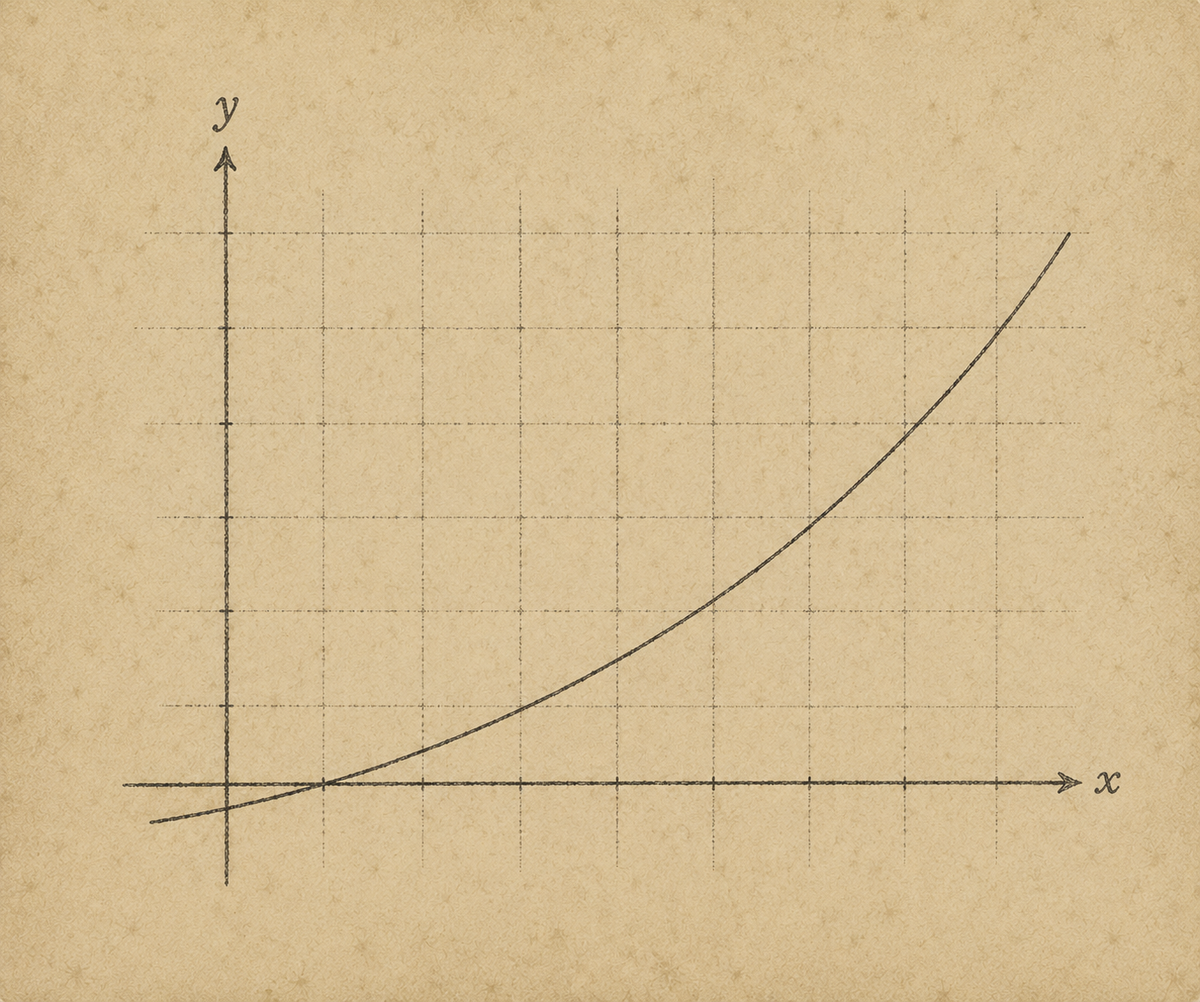
"Only when the tide goes out do you discover who's been swimming naked."
— Warren Buffett
Note: This is part three of The Tychean Codex, a five-part series drawing from Taleb's Incerto. It aims to synthesize core concepts from the series and build the intellectual foundation for a tail-risk investment strategy.
- The previous piece, part two, can be found here.
Table of Contents
Positioning, Not Prediction
Picking up surfing was one of the best decisions I ever made. It's an absolutely wonderful hobby. You have the opportunity to connect with nature, take in the beauty of the ocean and stay active. I was hooked after my first time and fell in love with the process. Some days I will sit in the lineup for hours without catching a single wave, but still feel grateful for the opportunity.
Of course, learning to surf can be incredibly frustrating. For those interested in actually improving their surfing technique, the ocean is an abysmal learning environment. It's inconsistent, every wave is different, and getting feedback is near impossible. Aside from an instructor, a friend willing to film you, or using drones to capture footage, you're left guessing what went wrong and how to improve.
I've since discovered, after a year of wipeouts and more seawater in my sinuses than I care to admit, that the most important factor when catching a wave is positioning. Most good surfers spend their time paddling long before the wave reaches their board. Not paddling for speed, but paddling for position. Placing yourself in the perfect position to succeed is the solution to surviving the tumultuous world of Extremistan that we discussed in Part 2 of this series. The days where I focus on positioning make catching waves a breeze, and this is the exact same skillset needed to survive extreme events.
When I'm in the lineup, I have no ability to predict the size of the next wave or exactly when it will arrive. The ocean may stay flat or erupt with a massive set, and it's entirely dependent on factors outside my control. What I do know is that a wave will eventually break in a general location. Positioning doesn't require me to know if the next set will bring a double overhead barrel or a total dud, or even when this will occur. I just need to be in the right place, so that whatever does arrive, I'm set up to catch it. Positioning changes my exposure to the waves before they arrive. It doesn't change the size or timing of the wave.
This distinction is the key insight to approaching extreme events. Our instinct, when we sense something might go wrong, is to try to predict exactly what and address that specific thing. Humans love this process of prediction and mitigation. We also happen to be terrible at it. Pearl Harbor, the 2008 financial crisis, the Fukushima meltdown, all catastrophes that blindsided the institutions we built to see them coming in the first place. The list of failed predictions is long enough to fill its own blog post, and it isn't limited to rare geopolitical shocks. When a cohort of executive leaders provided over thirteen thousand claims about their certainty, they were confident 80% of the time, but correct only 36% of the time.
Yet we persist. Institutions, public and private alike, love forecasts and predictions. Banks, consulting firms, and the Federal Reserve all produce predictions about the economy. The news is rife with them. We predict the climate, we predict demographics. It's genuinely hard to find something we haven't tried our hand at predicting, especially in the information age.
The mental model I hope to engender by the end of this piece is to shift from trying to predict the future, and focus on adjusting your overall exposure to upside and downside. This is what positioning is. On a surfboard, you give up attempting to predict exactly when and how a wave will appear. Instead, you find the location to maximize your upside whenever a wave happens to arrive. In order to generalize this mental model, we need to talk about two concepts: concavity and convexity.
Convexity and Concavity
Let's start by discussing a risk curve. In Part 1 we talked about distributions and how they are a way to conceptualize everything that could happen. Of course, if you roll a die once, your probability distribution collapses into a single value with a probability of 100%, but before the event happens, we can think about the likelihood of all possible outcomes.
Our risk curve is a similar concept. It tells us that if X event happens, we will experience Y upside or downside as a result. The X axis represents how much volatility a system is exposed to. The further right you travel, the greater the volatility. The Y axis represents upside or downside, with the center being neutral. A typical risk curve is shown below:
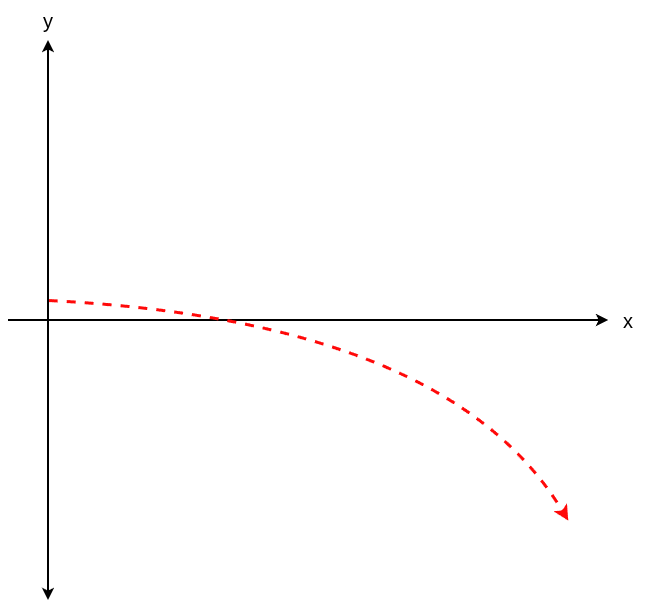
A concave risk curve. As volatility (x-axis) increases, downside (y-axis) accelerates.
This risk curve above is concave, and represents fragile objects. Consider a wine glass. A light bump, a bit of everyday handling, does essentially nothing to it. At low volatility, the glass (our "system") incurs no meaningful damage. Once you push past a certain threshold, perhaps you drop it or knock it hard against a counter, the glass completely shatters. The damage per unit of additional shock gets worse as the shock gets bigger. This is the core property of a concave risk curve. Every additional unit of harm compounds instead of accumulating evenly. A business running on thin margins behaves the same way. It can absorb small dips in revenue just fine, but a large enough dip renders the business insolvent.
This concave shape can be identified visually without knowing any mathematics. Concave functions open downward. If you poured a bucket of water on one, the water would roll right off the sides.
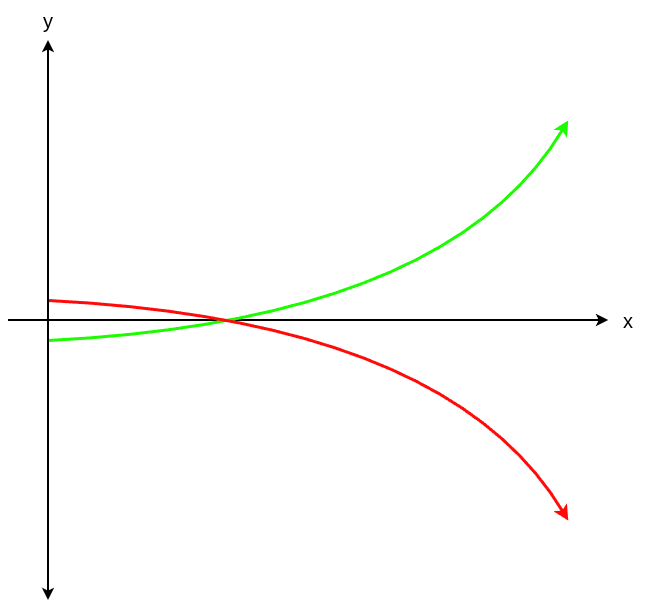
The concave curve (red) and convex curve (green) compared on the same plot. Concave curves open downwards and "shed water", convex curves open upward and "hold water".
Now let's consider a convex risk curve. Convex functions open upward, and would hold water poured on top of them. A convex risk curve is the exact opposite of a concave one. As the system is exposed to more volatility, it benefits. The gains compound the same way the concave curve's losses did.
Take a venture capital investment portfolio. Each individual investment can only lose what you put into it. Your downside is capped. The upside, however, is theoretically infinite. One breakout success has the potential to return 100X your initial investment and cover every loss of every failed bet many times over. The more small startups a VC firm invests in (i.e., increasing volatility), the greater the odds that one of them becomes the outlier that makes their entire portfolio. Going to cocktail parties full of interesting strangers works the same way. Most conversations cost you almost nothing when they fail to pan out, but the rare success can be disproportionately large.
A concave risk curve means your upside is limited and your downside is uncapped. A convex risk curve means your downside is limited and your upside is uncapped. We want our exposure curve to be convex, so how can we manufacture it willingly?
Convex Epistemics
You can create convexity in almost any situation, by following a few key rules and principles. These rules build on one another, starting by removing what is fragile, then looking for asymmetric upside, and finally protecting what is left.
Prediction
The first thing you can do is stop trying to predict the future. Here's a simple test: if the thought of not knowing what happens next makes you anxious, then you're in a fragile position.
A convex system doesn't need to know what's going to happen, because it's built to survive and benefit regardless of the outcome. It's only when you're exposed to loss that prediction starts to matter. When you catch yourself needing to predict something, it means you have downside exposure you're trying to work your way around, instead of removing completely.
Via Negativa
Via negativa is Latin for "the negative way." It's the idea that in complex systems, you often achieve more by removing harmful or unnecessary things than by adding helpful ones. The core insight presented in Taleb's Incerto series is about epistemic asymmetry:
You can know something is harmful with significantly more confidence than you can know something is helpful.
One of Taleb's favorite examples of this asymmetry is in the medical field. If a doctor tells you "stop smoking," "stop eating sugar," or "stop being sedentary," these are subtractive-based interventions. They're backed by extremely robust evidence. However, if a doctor tells you to "take this new supplement," or "try this novel drug," these addition-based interventions often carry hidden risks you cannot foresee (side effects, novel interactions, long-term unknowns that haven't shown up in current studies or trials).
This pattern can be generalized in other fields as well:
- Business: It's easier to know which practices are killing a company (bureaucracy, outdated processes, product concentration) than to predict which new initiative will make the company thrive.
- In Communication: Removing jargon and unclear sentences can improve the clarity of speech. Adding an additional point or idea may not add additional clarity, and may even make an audience more confused.
- In Your Lifestyle: Removing a toxic relationship, bad habits, or unnecessary debt is much safer than pursuing a new routine, commitment or investment that may not pan out.
This matters for convexity because removing sources of fragility has an asymmetric payoff of eliminating downside. Adding something new may come with additional downside. Via negativa is convex because you're eliminating what you already know hurts you, and reducing your downside exposure.
Optionality
If via negativa clears your deck, optionality stacks it. Options are a type of financial derivative that give you the right (but not the obligation) to buy or sell a stock at a fixed price. If I hold a call option, and the asset skyrockets in value, I can exercise the option and capture immense upside. If the asset tanks in value, my loss is limited to the fixed price I paid for the option.
This concept is generalizable beyond financial derivatives:
An option is any situation where you have limited downside, significant potential upside and an option to capitalize, but not the obligation to do so.
This situation mimics convexity perfectly. Instead of betting on specific outcomes, you're "buying" a range of possible good outcomes while capping your exposure to bad ones.
Optionality appears in a variety of ways:
- Small Projects: Most small projects likely go nowhere. The fixed cost is the time you sink into them. The upside is discovering a new career or passion.
- Networking Events: Cocktail parties, conferences, and other social gatherings require only the time and cost of attendance. The upside is making a lifelong friend, finding a mentor or connecting with someone presenting you a new opportunity.
- Acquiring New Skills: The cost is the time you spend developing a given skill without a guaranteed payoff. The upside is a skill that compounds into a new career, creative outlet or an opportunity you couldn't have predicted.
Ensuring that the "option" you choose has this payoff curve is critical. If we add something that has downside and forces us to act, we are undoing what we achieved via negativa. The two concepts only work together if they are implemented in a cohesive manner.
Via negativa is subtractive. You're looking to remove things you know are harmful, and the asymmetry comes from the certainty that it was bad for you. Optionality is additive, you're bringing something new that comes with asymmetric upside and a structural cap if it goes wrong.
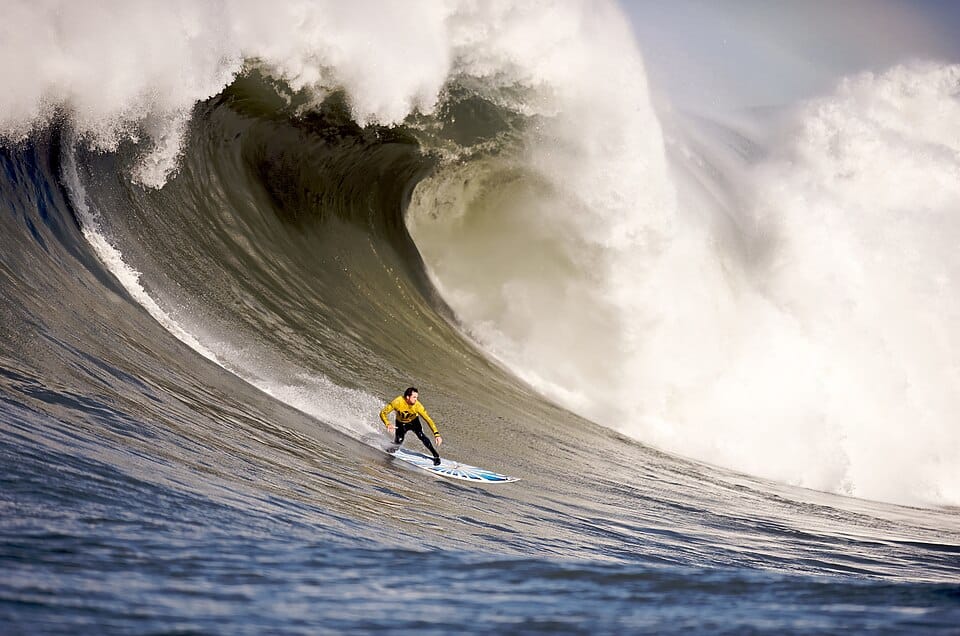
A surfer captures significant upside. Photo: Mavericks Surf Contest 2010 by Shalom Jacobovitz, licensed under CC BY-SA 3.0.

Redundancy
Redundancy is like buying insurance for yourself when you cannot completely eliminate downside via negativa. It seems in our hyper-efficient and optimized world many businesses have forgotten the value of having redundancy built into systems. In a normal cost-benefit calculation, redundancy often seems wasteful. Why should humans have two kidneys when we can live on one?
Of course, the answer should be obvious: you can lose one of your kidneys in an accident or injury. A few concrete examples of redundancy:
- An Emergency Fund: "Wasted" money you could have invested or spent, until you lose your job or the economy tanks.
- Multiple Suppliers: Having a single, low-cost supplier might be cheaper, until a pandemic halts the global economy.
- Backup Generators: Purchasing a generator takes up space in your garage and you never use it, until a natural disaster leaves you without electricity for a few days.
If via negativa removes the majority of your downside, and optionality exposes you to upside, redundancy buys you insurance on unforeseen or difficult to eliminate downside. It's never really possible to completely eliminate downside risk. We exist in a massive system. We depend on all kinds of things that aren't guaranteed to pan out (economics, supply chains, global information networks, Earth, scalable agriculture, the Sun). Redundancy helps us shore up what we can't address via negativa.
The Barbell Strategy
Taleb's Barbell Strategy is the natural evolution of the principles covered above. He cautions us to avoid "moderate risk" investments and instead allocate our investments as follows:
- Low Risk: 90%
- Moderate Risk: 0%
- High Risk: 10%
Why avoid the middle? The difference isn't about whether loss can occur, but whether loss is capped or hidden. Moderate risk investments often carry hidden, uncapped tail risk (the majority of retirement accounts were subjected to this fact in the '08 financial crisis, see Part 2 of this series) without a correspondingly large upside to justify the exposure. The high risk investments often have known downside, because they are recognized as high risk by definition. You're not avoiding risk, you're just being clear on what risk you're taking, and ensuring it is limited.
This allocation logic can be generalized, just like the other concepts we've covered.
The 90% is where via negativa and redundancy live. This is the important, boring and unglamorous area the majority of your effort should go. Assessing what's fragile, removing it, building stability and ensuring you're resistant to shocks. Few people brag about their backup generator, but it's the reason the remaining 10% exists at all.
The 10% is where optionality lives. This is where you try new hobbies, tinker on side projects, take a chance on a stranger you met at a party, or pursue the thing that probably won't work. Most of these bets will fail, and that's fine. You already know the cost.
Survival
Combined, these principles allow you to fundamentally shape your risk curve to mimic convexity. You stop trying to predict what wave is coming, and start putting yourself in a position to catch whatever wave arrives. You remove what's fragile. You maintain enough buffer to survive what you cannot remove. You place small, capped bets on the potential upside of the future. Predicting the future has always been the wrong question. The right question is: what happens to you regardless of what the future holds?
Remember, in Part 1 of this series we defined distributions as a belief or collection of many observations, not just one. What we've done in this piece is construct a process to build a distribution that is advantageous for us. In order to realize this distribution, we must continue to play. In surfing, this means paddling out to the lineup for years. In general, this means survival. Convexity is a position you hold across a thousand occurrences over a long time span, not a single attempt. Our approach doesn't work if you only get one try.
So what if you don't get many attempts? What if you cannot limit your downside in certain circumstances? Every principle we've covered assumes survivability. That assumption has a name, and it's the subject of our next piece: Ergodicity.
Learn More
- The Incerto Series - Nassim Taleb
- Statistical Consequences of Fat Tails - Nassim Taleb
- Dynamic Hedging - Nassim Taleb
- The Misbehavior of Markets - Benoit Mandelbrot